
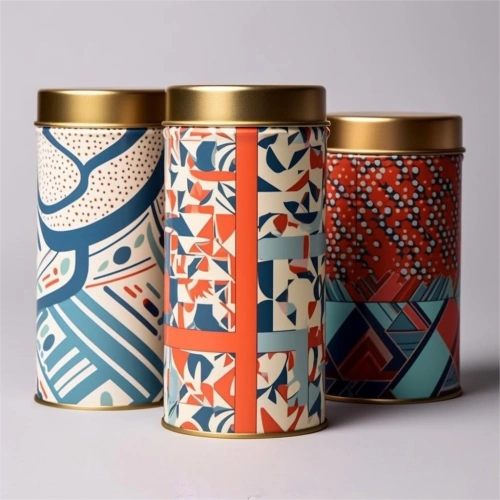
![CR tin Secure and Stylish Child-Resistant Tin Packaging for Safe Storage At [Your Company Name], we specialize in innovative child-resistant tin packaging solutions designed to meet the highest safety standards while enhancing your brand's visual appeal. Our child-proof tins are perfect for a variety of industries, including pharmaceuticals, cannabis, and household products, ensuring that safety and functionality go hand in hand. Our child-resistant containers are crafted with precision, employing a patented locking mechanism that is simple for adults to use but challenging for children, effectively reducing the risk of accidental access. Each tin is constructed using high-quality, durable materials that offer excellent protection against contamination and damage, making them ideal for both child-safe packaging and adult use. Safety is at the forefront of our design process, but we do not compromise on aesthetics. We offer custom tin packaging options that allow you to tailor the look and feel of your products to match your brand identity. With advanced printing and embossing techniques, your packaging is not just secure but also visually appealing, enhancing shelf presence and consumer attraction. Our tins are also environmentally friendly, aligning with current trends in sustainable packaging. They are reusable and recyclable, supporting your company's green initiatives. Choose from a variety of sizes and shapes to fit your specific needs, whether for cannabis packaging, pharmaceutical containers, or any other products requiring stringent safety measures. By choosing [Your Company Name], you are opting for child-resistant packaging that protects your products and your end users. Our tins meet all regulatory requirements for child-resistant effectiveness, providing you with peace of mind and your customers with safe, accessible solutions. Keywords: child-resistant tin packaging, child-proof tins, child-safe packaging, custom tin packaging, sustainable packaging, cannabis packaging, pharmaceutical containers.](https://goldentinbox.com/wp-content/uploads/2024/05/CR-tin-goldentinbox-2-s.webp)
5 Questions to Ask Before Choosing a Tin Box Manufacturer
Choosing a tin box manufacturer is not simply about finding the lowest unit price.
For purchasing managers sourcing tea tins, biscuit tins, chocolate tins, coffee tins, spice tins or other custom metal packaging, the real question is:
Can this manufacturer deliver the right tin, at the right quality, at the right time — without unexpected costs or production problems?
A small saving at quotation stage can disappear quickly if you later face:
- rejected samples,
- incorrect printing colors,
- tooling changes,
- poor embossing,
- damaged packaging,
- compliance questions, or
- a missed launch date.
This guide explains the five questions purchasing managers should ask before choosing a custom tin box manufacturer.
Quick Supplier Scorecard
Instead of using a wide table, we recommend displaying these five criteria as responsive cards on mobile.
20% — Similar Project Experience
Can the supplier show tins with similar size, structure, application and production complexity?
25% — Quality & Compliance
Can it explain tinplate, coatings, food-contact requirements, testing and QC procedures?
20% — Printing & Embossing
Can it control brand colors, metallic effects, embossing position and forming quality?
20% — Delivery Reliability
Is there a realistic plan covering tooling, sampling, production and international delivery?
15% — Commercial Transparency
Are tooling, samples, packing, freight and responsibilities clearly explained?
Total: 100%
A supplier scoring well across all five areas is usually a better purchasing candidate than one competing only on unit price.
1. Have You Manufactured Similar Tin Packaging Before?
Do not begin only with:
“What is your lowest price?”
A better first question is:
“Have you manufactured similar packaging for this type of product?”
Different products create different technical requirements.
| Application | Typical Purchasing Priority |
|---|---|
| Tea | Lid fit, aroma protection, premium appearance |
| Biscuits | Strength, stacking and dent resistance |
| Chocolate | Printing, metallic effects and embossing |
| Coffee | Closure, structure and presentation |
| Spices | Compact size and easy opening |
| Candy | Color consistency and promotional appearance |
| Popcorn | Large-tin strength and transport protection |
| Wine & Spirits | Premium finish and gift presentation |
For example, buyers sourcing tea packaging may care more about lid structure and protection from light and moisture. You can review different custom tea tin packaging solutions to understand the structures commonly available.
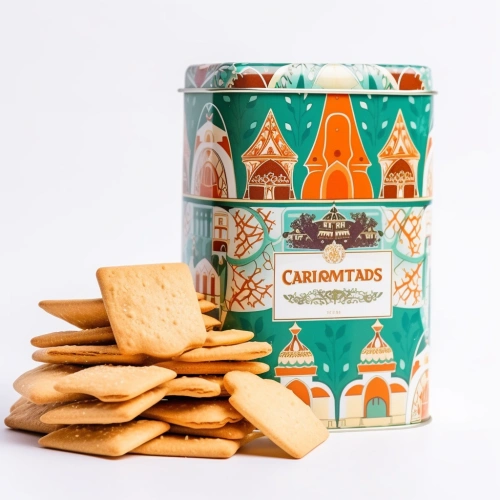
Biscuit and popcorn companies often require larger tins where forming, stacking and carton protection become more important. Examples can be found in Golden Tin’s cookie and popcorn tin packaging range.
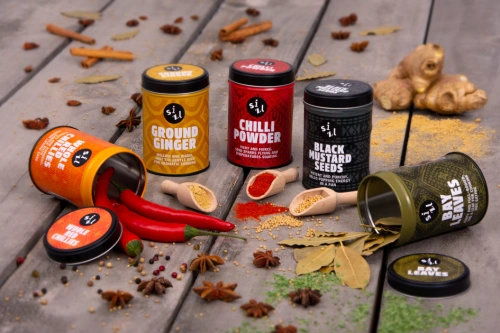
For spices, size efficiency and lid usability may be more important. See the spice tin packaging solutions.
Chocolate and coffee brands usually pay greater attention to premium printing, special finishes and presentation. Buyers can also review chocolate and coffee tin packaging options.
Existing Mould or New Tooling?
Another useful question is:
“Do you already have a similar mould?”
Using an existing mould can reduce:
- development cost,
- tooling cost,
- sampling time, and
- initial project risk.
Before opening new tooling, review a manufacturer’s existing custom tin shapes and product options.
A reliable supplier should be willing to say:
“Your requested size is close to one of our existing moulds. Would you like to evaluate that option first?”
This can be especially valuable for a first order or market test.
Buyer takeaway:
Experience is not about saying “yes” to every request. It is about identifying potential production risks before they become expensive.
2. Can You Support the Required Food-Contact Compliance?
If your tin is intended for tea, biscuits, chocolate, coffee, spices, candy or other food products, do not treat the words “food grade” as the complete answer.
Ask:
“What material, coating and compliance information is relevant to our actual product and destination market?”
A tin packaging system may include:
| Item | What to Confirm |
|---|---|
| Tinplate | Material specification |
| Internal coating | Suitability for intended use |
| Printing | Ink and printing system |
| Food-contact surface | Direct or indirect contact |
| Testing | Relevant documentation |
| Destination | EU, US, UK or another market |
For products sold in the European Union, food-contact materials including metal packaging fall under the EU food-contact framework. The European Commission states that food-contact materials placed on the EU market must comply with Regulation (EC) No 1935/2004 and applicable Good Manufacturing Practice requirements.
Buyers can review the official European Commission Food Contact Materials guidance.
For products sold in the United States, FDA guidance explains that substances used in food packaging can be regulated as food-contact substances depending on their intended use.
See the official FDA Packaging & Food Contact Substances guidance.
Ask This Follow-Up Question
Instead of asking only:
“Do you have a test report?”
ask:
“Does this test report apply to the material, coating and intended use of our actual project?”
That is a much more useful procurement question.
Buyer takeaway:
Compliance should be evaluated according to the actual packaging construction, product use and destination market — not simply by checking whether a quotation says “food grade.”
3. How Will You Control Printing, Embossing and Mass-Production Quality?
A digital artwork can look perfect on a computer screen.
The finished metal tin may look different.
That is because the appearance can be influenced by:
- tinplate surface,
- white coating,
- CMYK printing,
- Pantone colors,
- metallic tin background,
- matte or gloss varnish,
- embossing,
- forming, and
- curling or seaming.
For buyers who want to understand the basic manufacturing route, Golden Tin also provides an overview of how tinplate is converted into a custom tin box.
Recommended Approval Process
| Stage | Approval Point |
|---|---|
| 1 | Structure and dimensions |
| 2 | Dieline |
| 3 | Final artwork |
| 4 | Printing specification |
| 5 | Embossing drawing |
| 6 | Physical sample |
| 7 | Approved production standard |
| 8 | Mass-production QC |
For premium packaging, a physical sample is particularly important.
If You Need Embossing, Ask More Than One Question
Do not only ask:
“Can you emboss our logo?”
Ask:
“What embossing depth is technically realistic for this design?”
The result depends on:
- tinplate thickness,
- logo size,
- logo geometry,
- embossing position,
- distance from formed edges,
- printing design, and
- forming method.
Deeper embossing does not automatically mean better packaging.
For some projects, moving a logo slightly, changing its dimensions or reducing a difficult embossing area can produce a cleaner result and reduce the risk of deformation or printing damage.
Before approving production, buyers should also clarify what happens if a physical sample fails to match the agreed specifications because of a manufacturing issue.
A good manufacturer should have a clear corrective process.
Buyer takeaway:
Quality should be defined before mass production — not negotiated after a problem happens.
4. What Is the Real Lead Time From Artwork to My Warehouse?
Many buyers ask:
“How many days do you need for production?”
A better question is:
“What is the complete timeline from artwork approval to delivery at our warehouse?”
Production is only one part of the project.
Typical Planning Timeline
| Stage | Illustrative Planning Range |
|---|---|
| Structure confirmation | 1–5 days |
| Artwork / dieline confirmation | 2–7 days |
| Tooling, if required | 7–25+ days |
| Printed sample | 7–15 days |
| Sample courier | 3–10 days |
| Sample approval | 1–7 days |
| Mass production | 20–35 days |
| International transport | Depends on route and shipping mode |
These ranges are planning examples, not guaranteed industry lead times. Actual timing depends on project complexity, season, quantity, material availability and destination.
Golden Tin’s tea and cookie product pages also describe typical production stages such as material preparation, printing, cutting, forming, assembly and shipment preparation.
Plan From the Arrival Date Backwards
If the tins are required for:
- Christmas,
- Easter,
- Ramadan,
- Valentine’s Day,
- a supermarket promotion,
- a trade show, or
- a new-product launch,
tell the manufacturer:
“Our required warehouse arrival date is October 15.”
Do not simply say:
“We need production quickly.”
A professional supplier can then work backward to determine when artwork, samples and the purchase order need to be confirmed.
One MOQ Detail Many Buyers Miss
Also clarify whether the MOQ applies to:
the total quantity or each artwork / SKU.
For example:
5,000 tins with one artwork
and
5,000 tins divided into five artworks
may create very different printing and production economics.
Buyer takeaway:
Manage the project according to the required warehouse date — not only the quoted production lead time.
5. What Exactly Is Included in the Quotation?
Consider two suppliers quoting 10,000 tins.
Supplier A offers a lower unit price.
Supplier B appears slightly more expensive.
Which one is really cheaper?
Example
Supplier A
Tin price: $7,800
Tooling: $1,200
Sample: $300
Special packing: $400
Artwork adjustment: $150
Total before freight: $9,850
Supplier B
Tin price: $8,300
Tooling: Included
Sample: Included
Special packing: Included
Total before freight: $8,300
This is an illustrative example, but it demonstrates why procurement teams should evaluate total project cost, not only unit price.
Before comparing quotations, confirm whether the price includes:
| Cost Area | Confirm Before Ordering |
|---|---|
| Printing | Yes |
| Embossing | Yes |
| Tooling | Yes |
| Samples | Yes |
| Inserts | If required |
| Individual packing | If required |
| Export cartons | Yes |
| Freight | According to Incoterm |
Shipping terms also matter.
EXW, FOB, CIF and DDP are not equivalent quotations.
The International Chamber of Commerce publishes the Incoterms® rules used to define important responsibilities, costs and risks between buyers and sellers in international trade.
Buyers can review the official ICC Incoterms® information before comparing landed costs.
The Hidden Cost of Choosing the Cheapest Supplier
Imagine a 20,000-piece order.
Supplier A is:
$0.04 cheaper per tin.
The apparent saving is:
20,000 × $0.04 = $800
But that saving can quickly disappear if the project requires another sample, tooling correction, reprinting or urgent air freight because production was delayed.
Think about procurement cost as:
Unit Price + Development Cost + Quality Risk + Delivery Risk + Logistics Cost
—not unit price alone.
What Should You Send for an Accurate Tin Box Quotation?
A good RFQ does not need to be complicated.
Send these core details:
| Information | Example |
|---|---|
| Product | Chocolate |
| Size | 180 × 120 × 45 mm |
| Quantity | 20,000 pcs |
| SKUs | 2 artworks |
| Printing | CMYK + Pantone Gold |
| Special feature | Embossed lid |
| Destination | Rotterdam |
| Required arrival | October 15 |
If you do not yet have a technical drawing, you can start with:
reference image + approximate size + quantity + destination + required date.
The manufacturer’s job should be to help convert these requirements into a practical packaging solution.
Final Buyer Checklist
| Ask the Manufacturer | What It Protects |
|---|---|
| Have you produced similar tins? | Technical feasibility |
| Can you support compliance requirements? | Market access |
| How will printing and embossing be controlled? | Brand quality |
| What is the full delivery timeline? | Launch schedule |
| What exactly is included in the price? | Total project cost |
Price Matters. Predictability Matters More.
The best custom tin box manufacturer is not necessarily the supplier with the lowest quotation.
A valuable packaging partner should sometimes tell you:
“We recommend changing this before production.”
That could mean:
- using an existing mould instead of opening a new one,
- modifying an embossing position,
- changing the printing method,
- adjusting the structure,
- reconsidering SKU allocation, or
- changing the production schedule.
That is not a sales objection.
It is risk management.
If you would like to evaluate different shapes and sizes before developing new tooling, you can first Golden Tin’s custom tin range.
You can also learn more about Golden Tin’s manufacturing capabilities, quality approach and customer experience.
For a practical product example, see this custom cookie tin project and production process.
Planning a Custom Tin Packaging Project?
If you are developing:
tea tins, biscuit tins, chocolate tins, coffee tins, spice tins, candy tins or premium gift packaging, start with five things:
Size · Quantity · Artwork or Reference Image · Destination · Required Arrival Date
Golden Tin can first help review:
Structure → Existing Mould → Printing → Embossing → Sampling → Production → Delivery
before you commit to mass production.
Ask Us One Question:
“What is the safest and most cost-effective way to manufacture this tin?”
Request a Custom Tin Packaging Project Review